
AI SEO Guide 2026: How to Rank on Google, ChatGPT, Gemini & AI Search
Introduction :
in this AI SEO Guide 2026 Search is changing faster than ever before.
A few years ago, getting your website on the first page of Google was enough to attract visitors. Today, millions of people are asking questions directly to AI tools like ChatGPT, Google AI Mode, Google AI Overviews, Gemini, Claude, and Perplexity. Instead of showing only a list of blue links, these platforms generate complete answers in seconds.
This shift has changed the way people discover information online. As a result, website owners, bloggers, businesses, and SEO professionals need a new strategy to stay visible.
This is where AI SEO comes in.
AI SEO is not about replacing traditional SEO. Instead, it builds on proven SEO practices while making your content easier for AI-powered search engines to understand, trust, and reference. Google has confirmed that its AI-powered search features continue to rely on the same core ranking systems used in traditional Search. In other words, good SEO is still the foundation of success in AI search.
Many people believe there are secret techniques or special “AI SEO hacks” to rank in ChatGPT or Google AI. However, Google’s latest guidance says otherwise. The company recommends focusing on helpful, original, experience-based content instead of chasing shortcuts like AI-specific formatting or unnecessary files.

Why This Guide Matters
Whether you are a beginner or an experienced digital marketer, this guide will help you understand how AI search works and what you should do to improve your online visibility.
In this guide, you will learn:
- What AI SEO really means
- How Google AI Overviews and AI Mode work
- How ChatGPT, Gemini, and Perplexity discover and reference content
- The difference between SEO, GEO, and AEO
- How to create AI-friendly content
- How to improve your website’s authority and trust
- Technical SEO practices that still matter
- Future SEO trends you should prepare for in 2026
By the end of this guide, you will have a complete roadmap for improving your chances of appearing in both traditional Google search results and AI-generated answers.
What Is AI SEO?
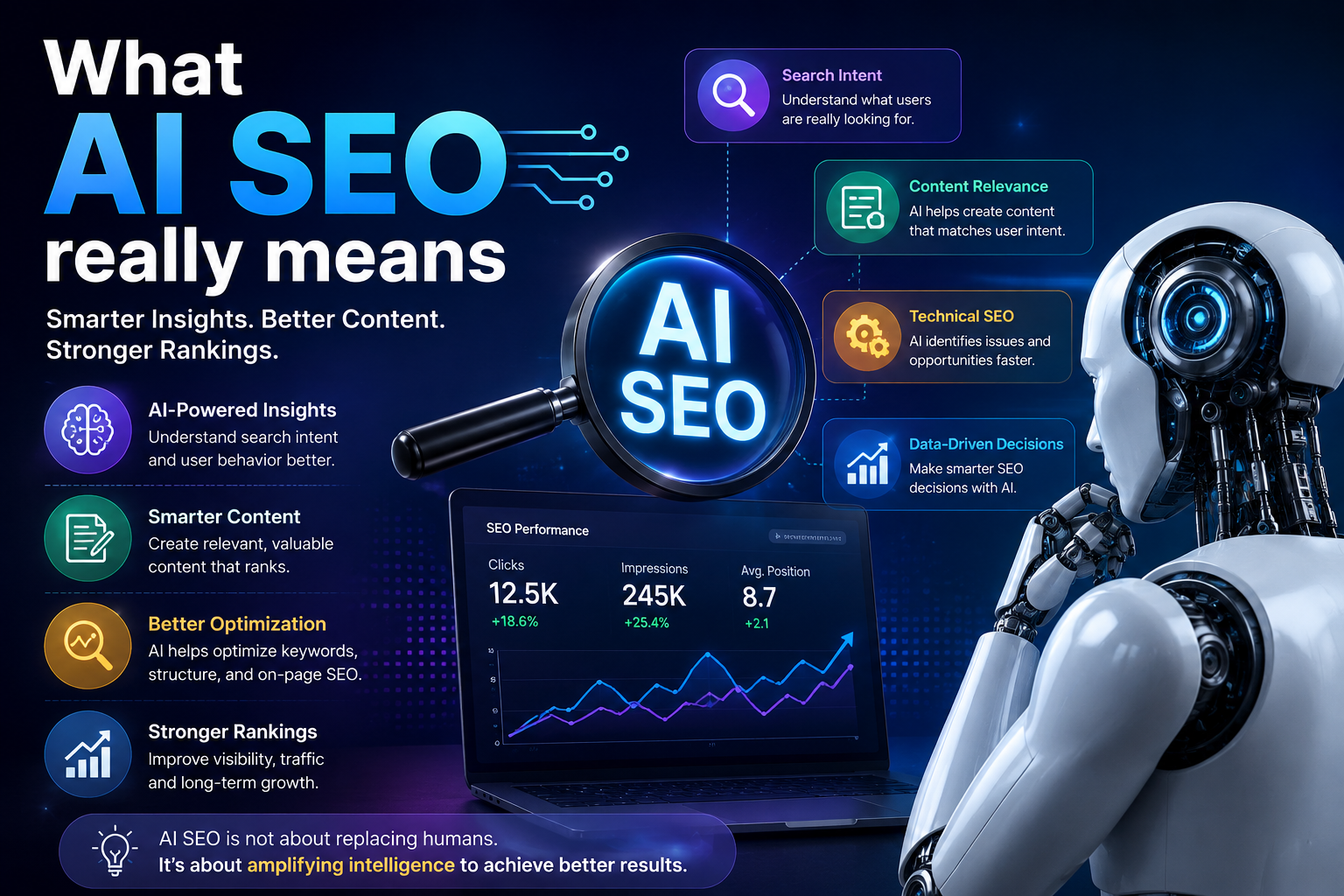
AI SEO is the process of optimizing your website so it can perform well in both traditional search engines and AI-powered search experiences.
Unlike older SEO strategies that focused mainly on ranking web pages, AI SEO aims to make your content easy for AI systems to understand, evaluate, and cite when generating answers.
Modern AI search engines use advanced language models together with search indexes to provide users with accurate and relevant responses. This means your content should not only rank well but also demonstrate expertise, originality, and usefulness. Google’s official documentation explains that AI search features use retrieval-augmented generation (RAG), which retrieves relevant pages from the Search index before generating an answer.
Why AI Search Is Becoming the New Standard
Users are changing their search habits.
Instead of typing:
“Best SEO tools”
People now ask:
“Which SEO tools are best for a small business with a limited budget?”
AI systems understand natural language and provide complete answers, making the search experience faster and more conversational.
This trend is encouraging businesses to focus on creating content that answers real questions clearly and accurately. Publishers are also adapting their content strategies because AI-generated answers are becoming an important way users discover information.
Who Should Read This Guide?
This guide is designed for:
- Digital marketers
- SEO professionals
- Bloggers
- Website owners
- WordPress users
- E-commerce businesses
- Content creators
- Freelancers
- Agencies
- Small business owners
- Students learning digital marketing
Whether you are starting your SEO journey or managing large websites, the strategies in this guide will help you prepare for the future of search.
What Makes This Guide Different?
Many articles discuss AI SEO in theory. This guide focuses on practical implementation.
Instead of repeating generic advice, you’ll learn:
- Actionable optimization techniques
- Real-world SEO examples
- AI-friendly content strategies
- Technical SEO recommendations
- E-E-A-T best practices
- Schema markup guidance
- Internal linking strategies
- AI citation optimization
- Content structures designed for featured snippets and AI-generated answers
The recommendations align with Google’s latest guidance, which emphasizes creating unique, people-first content, maintaining strong technical SEO, and avoiding unsupported “AI SEO hacks.”
What Is AI SEO?
Artificial Intelligence (AI) is changing the way people search online. Instead of only browsing a list of links, users now ask complete questions and receive direct answers from AI-powered search engines.
This change has introduced a new concept called AI SEO.
AI SEO is the process of optimizing your website so that it performs well in both traditional search engines and AI-powered search experiences. The goal is not only to rank on Google but also to increase the chances that your content is referenced or cited in AI-generated answers.
Unlike traditional SEO, which mainly focuses on improving rankings in search results, AI SEO also considers how AI systems understand, evaluate, and summarize information.
However, there is one important fact every website owner should know.
Google officially states that optimizing for AI search is still SEO. Terms like Generative Engine Optimization (GEO) and Answer Engine Optimization (AEO) describe AI-focused efforts, but Google explains that the same core SEO and quality systems continue to power AI features such as AI Overviews and AI Mode.
AI SEO vs Traditional SEO
| Traditional SEO | AI SEO |
|---|---|
| Focuses on ranking web pages | Focuses on ranking and AI visibility |
| Targets search engines | Targets search engines and AI assistants |
| Optimizes keywords | Optimizes topics, entities, and user intent |
| Improves organic traffic | Improves organic traffic and AI citations |
| Focuses on backlinks | Focuses on authority, trust, and helpful content |
| Optimizes for SERPs | Optimizes for AI-generated answers and SERPs |
Traditional SEO is still important. AI SEO simply expands your strategy to include AI-powered search experiences.
What Is AI Search?
AI Search is a modern search experience where artificial intelligence understands a user’s question and generates a complete answer instead of showing only a page of links.
For example:
Traditional Search
Search:
Best SEO tools
Google displays:
- Ahrefs
- SEMrush
- Moz
- Surfer SEO
You visit different websites to compare them.
AI Search
Search:
Which SEO tool is best for a beginner with a small budget?
AI provides:
- A direct answer
- A comparison table
- Pros and cons
- Recommended tools
- Links to trusted sources
Instead of opening ten websites, users often receive the information they need immediately.
This is why AI search is becoming more popular for informational queries. AI systems retrieve information from trusted web pages and generate answers with supporting links where appropriate.
Popular AI Search Platforms
Today, people search using many AI-powered platforms, including:
- Google AI Overviews
- Google AI Mode
- ChatGPT Search
- Gemini
- Claude
- Perplexity AI
- Microsoft Copilot
Each platform has a different interface, but they all aim to deliver quick, conversational answers backed by reliable information.
How AI Search Works
Although every AI platform works differently, the overall process is similar.
Step 1: User asks a question
Example:
How can I improve my website SEO?
Step 2: AI understands the question
The AI analyzes:
- User intent
- Context
- Keywords
- Related topics
- Natural language
Step 3: Relevant web pages are retrieved
Modern AI search systems often use Retrieval-Augmented Generation (RAG). This means the AI first retrieves relevant pages from a search index and then uses information from those pages to generate an answer. Google has confirmed that its AI features use this approach for fresher and more reliable responses.
Step 4: AI generates an answer
Instead of copying content, the AI creates a summarized response and may include links to supporting websites.
Why AI SEO Matters in 2026
Search behavior has changed dramatically.
Many users now expect direct, conversational answers instead of clicking through multiple websites. Publishers are increasingly treating AI platforms as another way people discover content, not just traditional search.
As a result, businesses that ignore AI search risk losing visibility.
Here are some key reasons AI SEO matters:
1. AI Search Is Growing
AI-powered search is becoming a regular part of how people look for information. Google continues expanding AI Overviews and AI Mode, while tools like ChatGPT, Gemini, and Perplexity are attracting millions of users.
2. Users Ask Longer Questions
Instead of typing short keywords, people ask complete questions.
For example:
Old search:
SEO Tips
New search:
What are the best SEO strategies for a small business in 2026?
This makes topical authority and comprehensive content more important than ever.
3. Authority Builds Visibility
AI systems are more likely to surface content that demonstrates expertise, originality, and trustworthiness. Google recommends creating unique, non-commodity content rather than generic articles that could be written by anyone.
4. Better User Experience Wins
AI search rewards pages that are:
- Easy to read
- Well structured
- Fast loading
- Mobile friendly
- Helpful and accurate
These are also the foundations of good SEO.
Is SEO Dead?
No.
One of the biggest myths is that AI has replaced SEO.
Google’s official guidance says the opposite:
- SEO best practices still matter.
- Technical SEO is still important.
- Helpful, people-first content remains essential.
- Strong site structure and crawlability continue to support visibility in both classic Search and AI features.
So, instead of replacing SEO, AI search makes high-quality SEO even more valuable.
Grow Your Organic Traffic with Professional SEO in Delhi
Need proven results instead of generic theory? Check out our tailored SEO services in Delhi NCR and partner with a verified SEO expert to rank #1 on Google, capture qualified leads, and beat your competition.
👉 Also see: Hire a Freelance Website Designer in Delhi | Local Google Maps SEO Guide
